Škocjan Caves history begins with the landscape
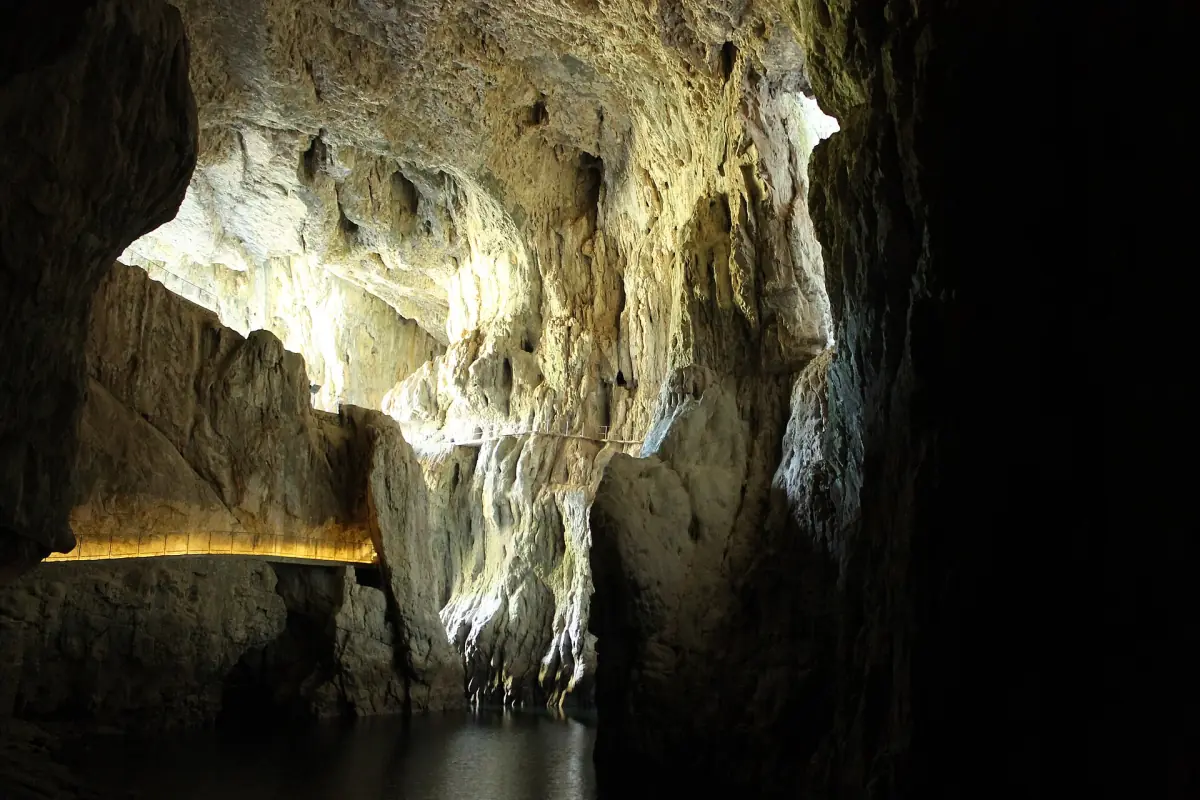
Škocjan Caves history is a story of both a river-shaped landscape and the people who encountered it. The caves lie in the Kras of southwestern Slovenia, where the Reka has cut an underground canyon into limestone. Collapse dolines form part of the same setting. Understanding that connection helps make sense of a visit: the river, the underground spaces and the open depressions belong to a wider Karst landscape rather than separate attractions.
The World Heritage description brings together limestone caves, collapse dolines and the river canyon. For a visitor, this gives a useful way to look beyond individual formations. Notice the relationship between the underground route and the landscape around the villages. The Karst guide puts the caves in their regional setting, while the main visit guide turns that background into practical choices about entry and transport.
Prehistoric traces and Valvasor
The heritage record includes prehistoric settlement, burial and ritual traces. These give the area a human history alongside its geological significance. Think of them as evidence of different kinds of activity around the caves, rather than reducing the place to a single moment of discovery. Human encounters with a cave landscape and the exploration of particular underground passages are different parts of its story.
Valvasor depicted the collapse dolines in 1689. That date is a useful historical reference when looking at the open landscape around Škocjan. It connects a written and visual record with features that still shape the visit. Keep it attached to those depictions: the long history of the site is better understood through specific events and surviving traces than through an invented sequence of discoveries.
Visit Škocjan and Lipica
This combined day connects the cave landscape with Lipica and includes a driver-guide.
Hand-picked tours, booked through Viator. Prices are indicative starting prices in euros (as of October 2026). Tap a tour for live availability and the current price in your currency.


Škocjan and Lipica in one outing
UNESCO recognition and the scale of the caves
Škocjan became a UNESCO World Natural Heritage site in 1986 under criteria (vii) and (viii). The inscription covers 413 hectares. This recognition concerns the natural landscape and its geological value. It is a useful context for the visit, but your ticket and the current route still determine which passages you follow on the day. For those arrangements, use the admission guide.
UNESCO describes about 6 km of underground passages and more than 200 m of overall depth. Those are descriptions of the cave system. They are different measurements from the length and effort of the visitor route. The Martel Chamber's volume is described as more than 2 million cubic metres. Read such figures as a sense of the underground scale, rather than as distances you will personally cover or a promise that every named space lies on your chosen walk.


Regional Park and international protection
The protected area is a Regional Park. Its park law dates from 1996, and the public administration began operating in the following year. The Kras Biosphere Reserve dates from 2004. These milestones show how recognition of the landscape developed into different forms of protection and management. Keep their names distinct when reading about the site: the World Heritage inscription, park and biosphere reserve describe related parts of its protected setting.
The Ramsar designation dates from 21 May 1999 and covers 305 hectares. The Ramsar register's information dates from 1999, so this is a historical designation reference. Its area is different from the World Heritage inscription's area. Use the date to understand the history of wetland recognition without treating the old register entry as a current report on every aspect of ecological management.
Lipica and the human history of the Karst
Lipica adds a different historical theme to a regional day. The stud farm dates from 1580 and belongs to the story of the Lipizzaner horse. Read the Lipica guide if you want to combine that heritage with the caves. The combined outing from Portorož includes a driver/guide, insurance and hotel or port pickup and drop-off. Budget admissions separately when comparing its practical arrangements with your plans.
A visit still needs physical preparation, however much history you want to explore. Expect 12 °C underground, wet or uneven paths, slippery ground and hundreds of steps. The ticket guidance advises against the route for mobility difficulties, fear of heights or claustrophobia. Photography inside is prohibited. Read walking preparation and choose a guided start that leaves enough time to absorb the landscape around the caves as well.
Questions about the heritage
When did Škocjan become World Heritage?
The UNESCO World Natural Heritage inscription dates from 1986, under criteria (vii) and (viii).
What did Valvasor record?
The heritage account refers to his depictions of the collapse dolines in 1689.
Is the protected area a National Park?
Its designation is Regional Park. The park law dates from 1996, followed by the start of public administration in the next year.